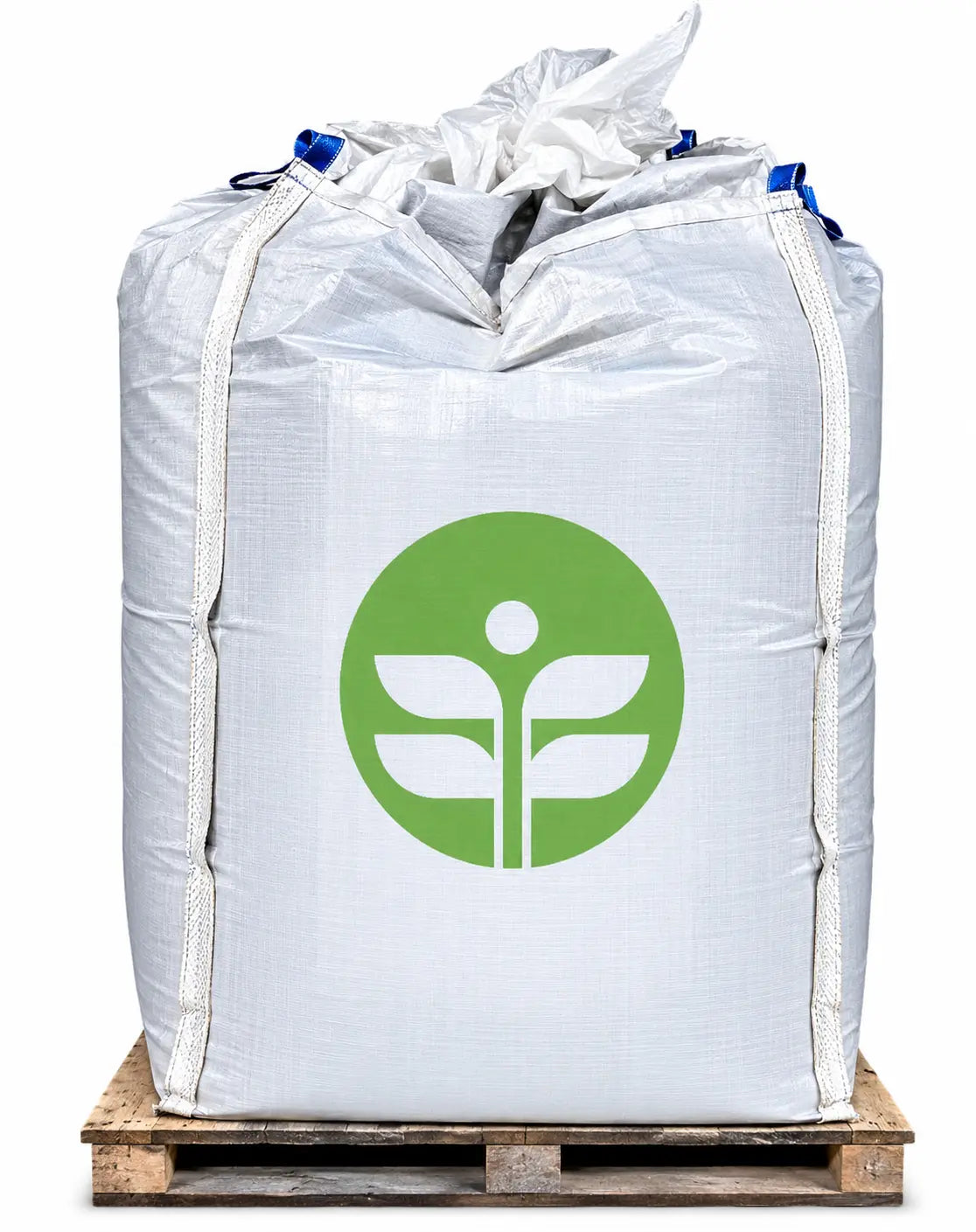
Biochar Bulk Super Sack
Biochar Bulk Super Sack
Couldn't load pickup availability

Biochar Bulk Super Sack
Premium high-carbon soil amendment for gardens, farms, landscapes, compost systems, and long-term soil building.
FutureFresh Farms Premium Raw Biochar is made from responsibly harvested deadfall pine that is chipped and converted into stable, porous carbon through a low-emission pyrolysis process. The result is a durable, high-carbon soil amendment designed to improve soil structure, support water-holding capacity, increase long-term soil carbon, and create habitat for beneficial soil biology in the root zone.
Raw biochar works like a long-lasting soil framework. Its highly porous structure helps hold air, water, nutrients, and microbial life, especially when it is charged before application. For best results, we recommend blending or charging raw biochar with compost, manure, fertilizer, worm castings, compost tea, MicroRevive, or another nutrient-rich biological input before incorporating it into soil.
Biochar is a long-term investment in soil health. When used as part of a complete soil-building program, it can help reduce input needs, improve moisture efficiency, support healthier plant growth, and provide lasting benefits for future growing seasons
Common Uses:
Garden beds, raised beds, and potting soil blends.
- Compost enhancement
- Tree and shrub planting
- Turf, landscaping, and nursery mixes
- Farm, ranch, and large-scale soil health applications
- Stormwater, restoration, and revegetation projects
- Odor management in landscape and animal operations
- Whole-yard soil fortification and bulk soil blending
Suitable for use in UDSA NRCS Soil Health Programs such as Conservation Practice Standard Code 336.
Available Sizes:
- 1 Cubic Foot Package
Best for gardens, raised beds, containers, trees, shrubs, and small soil-building projects.
- 2 Cubic Yard Super Sacks
Best for farms, landscapers, nurseries, municipalities, restoration contractors, whole-yard fortification, and bulk soil blending. Bags are densely packed with little void space to provide excellent value.
Bulk biochar available upon request. Based on size, flat-bed trailers can hold up to qty-26 supersacks. The customer pays freight. FutureFresh Farms can assist with logistics quotes.
Application Guidance:
Blend raw biochar into compost, soil, or planting media and add MicroRevive before use. Typical biochar application rates range from 5% to 20% by volume, depending on crop type, soil condition, and project goals.
For most 4’ x 8’ garden beds, apply only 1 cubic foot of biochar as a one-time soil-building application. Spread evenly across the entire bed and incorporate into the top 4” to 6” of soil.
Because this is raw biochar, we recommend pre-charging it as directed before direct planting use. Charging helps front-load the biochar with moisture, nutrients, and beneficial biology before it enters the soil.
Biochar with MicroRevive for Gardens:
For garden-scale applications, use the following method to charge 1 cubic foot of raw biochar before incorporating it into a 32 sq ft garden bed.
Practical Mixing Recommendation
Dilute 1–2 oz MicroRevive into 1 gallon of clean, preferably dechlorinated water
Pour the mixture over 1 cubic foot of biochar and mix thoroughly until the biochar is evenly damp. Use enough to fully moisten the biochar without making it soupy. You may have to add more water than 1 gallon.
Let the biochar sit moist and shaded for 1–24 hours, mixing occasionally. When ready, spread the charged biochar evenly across the garden bed and incorporate into the top 4” to 6” of soil.
When available, combine with equal parts compost, worm castings, or other organic matter for best results. Spread evenly and incorporate into the top 4” - 6” of soil.
After incorporation, maintain soil biology with the normal raised-bed MicroRevive maintenance rate of 1–2 teaspoons per 32 sq ft garden bed every 2–3 weeks during active growth.
Important Note:
This is raw biochar and is not pre-charged with nutrients. Biochar performs best when used as part of a complete soil-building system that includes compost, organic matter, nutrients, moisture, and the beneficial biology provided by MicroRevive.
Testimonials


MicroRevive Biological Soil Amendment
MicroRevive Biological Soil Amendment
Couldn't load pickup availability